Oct 12, 2026Manufacturing Insights
10 Questions for Your China Bag Supplier
Ten questions that separate a real factory from a reseller — tooling ownership, MOQ flexibility, QC checkpoints, compliance docs, bulk-vs-sample consistency.
On a sourcing platform, every supplier looks identical. Same product photos, same "we are a professional manufacturer" line, same 12-year-experience claim. Price comparison doesn't separate them, because a cheap quote and an expensive quote may describe genuinely different products.
What separates a real manufacturing partner from a reseller is not the profile page — it is how they answer specific operational questions. Here are ten worth asking, and what a good answer sounds like.
- Who owns the mould if I pay for custom hardware? Why it matters: if the factory owns your custom lock or logo plate, you cannot move production later. You are locked in — and they know it. A good answer: the mould is yours. It is tagged, stored, and you can have it released. Some factories absorb tooling cost above a certain quantity, but ownership still transfers to you.
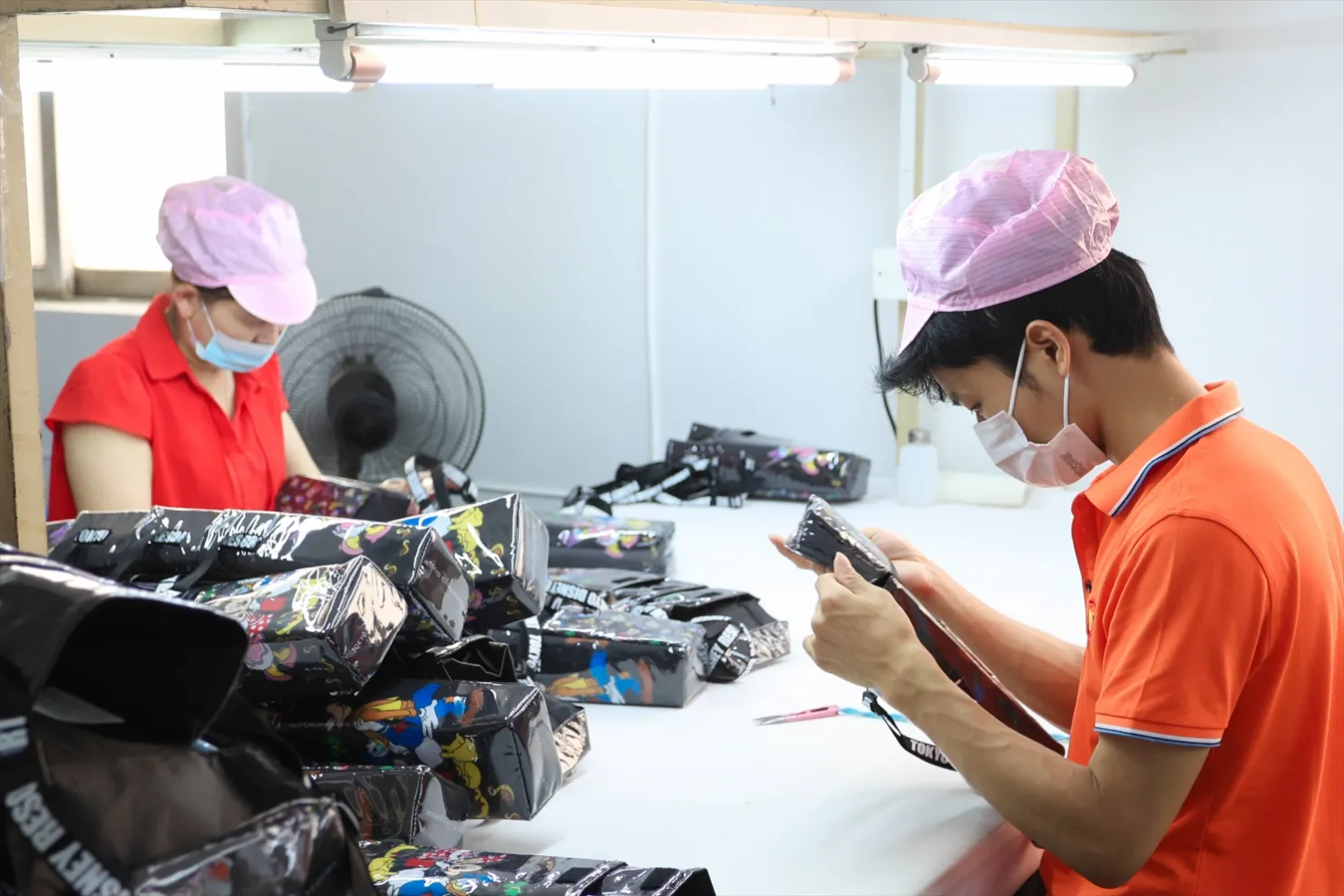
- Can you show me the workshop that will make my product, on video, this week? Why it matters: a trading company can show you a showroom. Only the actual production site can show you the line, the operators, and the material store. A good answer: yes, and they will show you the specific process — cutting, skiving, edge painting, assembly — not just a walkthrough of finished goods.
- What is your MOQ, and what happens to unit price at half that quantity? Why it matters: an MOQ without a price curve is not an answer. You need to know whether 150 pieces is possible at a premium, or refused. A good answer: a specific number, plus the price impact, plus which design choices would make a smaller run viable. We covered this from the buyer's side in our low-MOQ manufacturing guide.
- Where exactly is production, and which clusters handle which processes? Why it matters: "China" is not an answer. Leather goods, hardware, knitwear and moulding sit in different industrial clusters. A supplier who coordinates across them will name them. A good answer: named cities and named specialisations. Ours, for example, runs through Shenzhen for hardware tooling, Guangzhou for leather, Dongguan for knitwear, and Foshan for casting and mould work — coordinated from our Shenzhen hub.
- What does your QC protocol check, and can I see the inspection report? Why it matters: "we check quality" is not a protocol. You want to know the checkpoints, the standard, and whether you get documentation. A good answer: material inspection on arrival, inline checks at defined stages, and pre-shipment inspection against an agreed AQL — with a report you receive before the balance payment. Our Japanese retail QC guide shows what a rigorous protocol looks like.
- What compliance documents can you provide for my market? Why it matters: if you sell into the EU or California, missing documentation can stop a shipment or get a listing pulled. This is not a detail to discover at customs. A good answer: they ask which market first, then name the specific requirements — REACH SVHC declarations for the EU, CPSC for the US, Prop 65 warnings for California — and confirm whether testing is done in-house or by a third-party lab.
- How do you handle it when bulk differs from the approved sample? Why it matters: every factory has this happen. The question is what happens next — and you want to hear the process, not a promise that it never occurs. A good answer: a defined tolerance for acceptable variation (colour, dimension), a documented escalation path, and clarity on remediation responsibility. Vague reassurance is a warning sign.
- What is your actual sampling timeline, and what is included? Why it matters: "7–10 days" means different things to different suppliers — is that from tech pack approval, from material confirmation, or from deposit? A good answer: a named start point, a stated number of revision rounds included, and clarity on who pays sample shipping.
- Can I talk to the person who will manage my production? Why it matters: the salesperson who answers your first email is often not the person who will be solving problems in week six. A good answer: yes, and they introduce you early. You want a direct line to production management before you place the order, not after something goes wrong.
- What do you need from me to quote accurately? Why it matters: this reveals how they work. A supplier who quotes from a photo will change the price later. A good answer: tech pack or reference sample, target quantity and reorder quantity, material and hardware specifications, packaging requirements, destination and Incoterm. We published a breakdown of what drives bag manufacturing cost if you want to understand the line items before you request quotes. What you are really testing
None of these questions are about catching someone out. They are about whether the supplier thinks in operations or in sales talk.
A manufacturing partner will answer with specifics: named cities, defined checkpoints, stated tolerances, clear ownership terms. A reseller will answer with reassurance: "don't worry", "we have many years of experience", "quality is our life".
Ask all ten on a first call. The pattern of answers tells you more than any factory audit photo.
Currently comparing suppliers? Send us your tech pack or reference sample and ask us the same ten questions. Request a quote — technical feedback and DFM review within 24 hours.